Is a Bigger Air Conditioner Better? The Truth About Oversizing
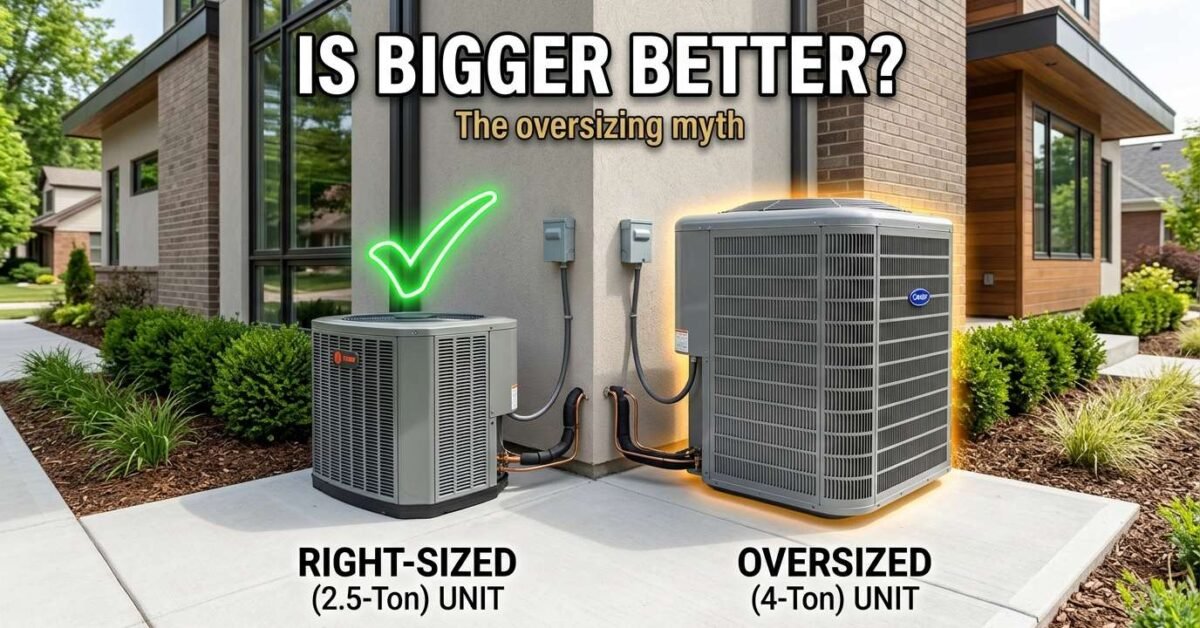
When homeowners replace an air conditioner, a surprising number ask for a bigger unit than they had, figuring more capacity means more comfort. It is one of the most expensive myths in home cooling. A bigger air conditioner is usually a worse air conditioner, and here is exactly why.
What an oversized AC actually does
An air conditioner does two jobs: it lowers the temperature and it removes humidity. Removing humidity takes time, because moisture condenses on the coil only while the system runs. An oversized unit blasts the air cold so quickly that it hits the thermostat setpoint and shuts off long before it has dried the air out. The house feels cold and clammy at the same time.
Short cycling costs you money and equipment life
Because it overshoots so fast, an oversized system turns on and off frequently, a pattern called short cycling. Every start draws a surge of power and adds wear to the compressor, the most expensive part to replace. Short cycling means higher bills, more repairs, and a shorter lifespan, the opposite of what the homeowner was hoping to buy.
Why systems get oversized in the first place
Some contractors size by square footage alone or simply match whatever was there before, which may itself have been oversized. Others round up to avoid a callback in a heat wave. The reliable alternative is a Manual J load calculation, which sizes the system to your home’s actual heat gain. The Air Conditioning Contractors of America maintains the Manual J standard that professionals use.
How to get the right size
Start with a climate-adjusted estimate using our HVAC sizing wizard or the quick AC tonnage calculator, then ask any contractor to show you their Manual J. If a bid jumps a full ton above your estimate with no explanation tied to insulation, windows, or ductwork, ask why. A right-sized system runs longer, quieter cycles, holds humidity down, and costs less to own.
The bottom line
Bigger is not safer; it is clammier, noisier, and more expensive. Size to the load, not to a hunch. When you know your correct tonnage, price the installation with our AC replacement cost calculator.
Can an air conditioner be too small?
Yes, and it is worth naming so you do not overcorrect. An undersized unit runs almost continuously and still struggles to hit the setpoint on the hottest afternoons. The difference is that undersizing is far less common than oversizing, and the fix is not simply to jump up a size on every replacement. A proper load calculation lands you in the right place, protecting you from both failure modes. If your current system runs nonstop and never quite cools, check whether the home has lost insulation or gained square footage before assuming you need more tonnage, and confirm with the tonnage calculator.
What oversizing actually costs you
The penalty shows up in three places. First, purchase price: a larger system costs more to buy and install for capacity you do not need. Second, energy: short cycling and poor humidity control push up your monthly bill, so you pay again every summer. Third, repairs and lifespan: frequent starts wear the compressor, the single most expensive component, which can mean earlier failure and a sooner replacement. Add those together and an oversized system is one of the quietly expensive mistakes a homeowner can make on a project that already costs thousands. The good news is that it is entirely avoidable with a load calculation and a contractor willing to show their work.
The humidity connection people miss
Comfort is not just about temperature; it is about how dry the air feels. A right-sized system runs in longer, steadier cycles that give the coil time to wring moisture out of the air, so a home at 74 degrees feels genuinely comfortable. An oversized system leaves that same 74-degree home feeling damp and sticky, which pushes people to lower the thermostat further, chasing comfort they cannot buy with temperature alone and driving the bill even higher. Getting the size right is often the difference between a home that feels fresh and one that never quite does, at any thermostat setting.
Frequently asked questions
Is a bigger air conditioner better?
No. An oversized AC cools too fast to remove humidity, short-cycles, wears out sooner, and costs more to run. Right-sizing to a load calculation is best.
What happens if my AC is too big?
It short-cycles, leaves the home cold but humid, raises energy bills, and shortens the compressor’s life.
How do I know if my AC is oversized?
Signs include very short cooling cycles, a cold but clammy feeling indoors, and frequent on-off operation. A Manual J load calculation confirms the correct size.
Get real quotes from local HVAC pros
Compare installed prices from licensed contractors near you. Free, no obligation — takes about a minute.