Heat Pump vs Gas Furnace: Which Is Cheaper to Run?
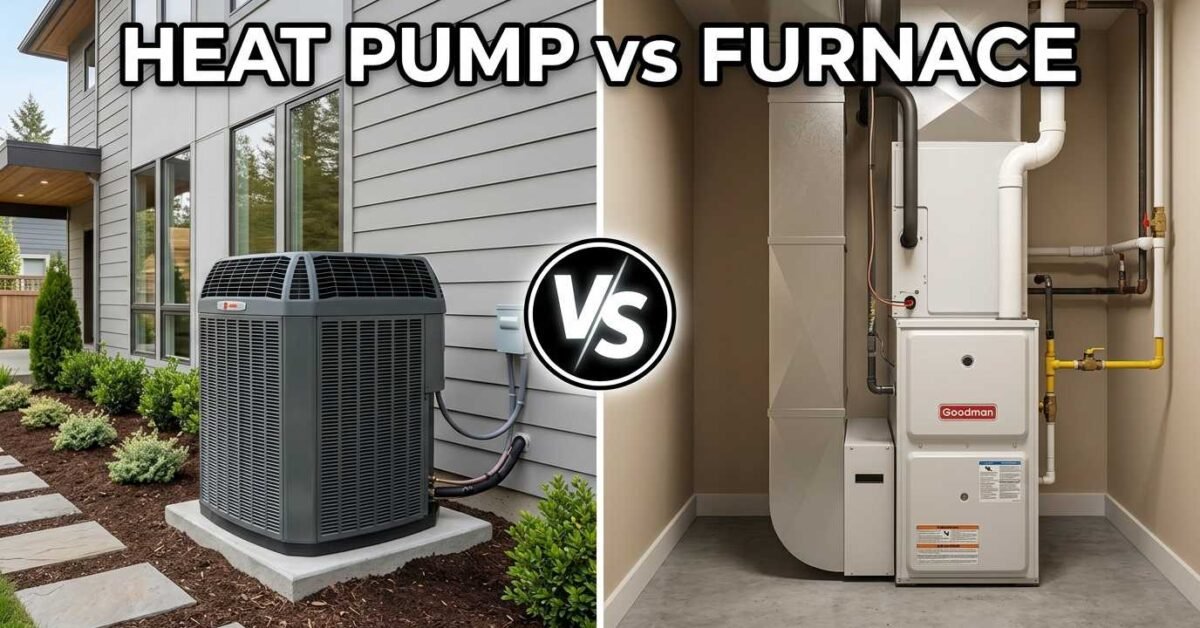
The heat pump versus gas furnace question is one of the most common — and most location-dependent — decisions in home heating. Neither is universally better; the right answer depends on your climate, your electricity rate, your gas price, and what equipment your home already has. This guide walks through the comparison with real numbers so you can make the decision for your home, not in the abstract.
How a heat pump heats differently than a furnace
A gas furnace burns fuel to create heat. A heat pump moves heat from outdoor air into your home using electricity and a refrigerant cycle — the same process as an air conditioner, but reversed. Because it moves heat rather than creating it, a heat pump can deliver two to four units of heating energy for every unit of electricity it consumes. That efficiency advantage is why heat pumps cost less to operate in many climates.
Where heat pumps win on running cost
In mild to moderate climates (zones 2–4), where winter temperatures rarely drop below 25°F for extended periods, a heat pump runs at its highest efficiency and almost always costs less per year than a gas furnace. This covers most of the Southeast, South, Southwest, and Pacific coast. The heat pump vs furnace calculator compares annual costs for your state, electricity rate, and gas price.
Where furnaces can still win
In cold climates (zones 5–7) with cheap natural gas and expensive electricity, a high-efficiency gas furnace can cost less to operate per year than a heat pump, even a cold-climate model. The crossover depends on the ratio of your gas price to your electricity rate. In states where gas is under $1.00/therm and electricity is over $0.20/kWh, the furnace often has the running-cost edge.
Installed cost comparison
A heat pump replaces both your AC and your furnace, so the fair installed-cost comparison is heat pump vs AC-plus-furnace. On that basis, the installed costs are often close. Estimate each: heat pump cost vs AC + furnace cost.
The tiebreaker: cooling efficiency and incentives
A heat pump cools your home in summer as well as heating it in winter, and high-SEER2 heat pumps are often more efficient coolers than standalone AC units. If you are in a climate that needs both heating and cooling, the heat pump’s dual-function advantage is a genuine tiebreaker. Utility rebates also favor heat pumps in many states, further tipping the economics.
Frequently asked questions
Is a heat pump cheaper to run than a gas furnace?
In mild to moderate climates with reasonable electricity rates, usually yes. In very cold climates with cheap gas and expensive electricity, a furnace can win. Use the calculator to compare for your state.
Can a heat pump replace a gas furnace?
Yes. A heat pump handles both heating and cooling. In cold climates, a cold-climate model is needed for reliable winter performance.
What is the most efficient heating system?
Geothermal heat pumps are the most efficient, followed by air-source heat pumps. Both outperform gas furnaces on energy efficiency, though cost-effectiveness depends on local fuel prices.
Get real quotes from local HVAC pros
Compare installed prices from licensed contractors near you. Free, no obligation — takes about a minute.