Boiler Sizing Guide 2026 | How Many BTUs Does Your Home Need?
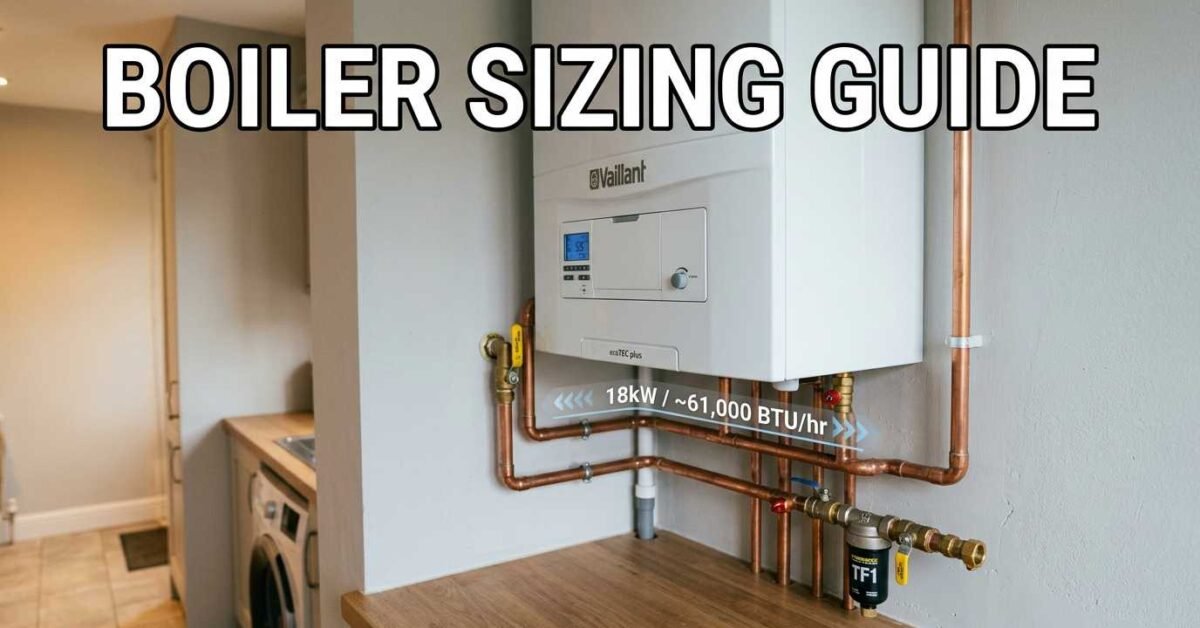
Sizing a boiler correctly is one of the most important steps in a heating project, yet it is also one of the most commonly misunderstood. An oversized boiler wastes fuel by cycling on and off too frequently, while an undersized one cannot keep the home warm on the coldest days. This guide explains how boiler sizing works, gives you a reference by home size and climate, and shows you how to estimate your needs before calling a contractor.
How boiler sizing works
Boilers are sized by their BTU output — the amount of heat they can deliver per hour. Your home’s required BTU depends on its square footage, climate zone, insulation, windows, and the type of heat distribution (baseboard, radiators, or in-floor radiant). The goal is to match the boiler’s output to your home’s heat loss on the coldest expected day, with a small safety margin.
Boiler size by square footage (rough guide)
For a moderately insulated home in a cold climate (zone 5–6), a rough starting point is 40 to 50 BTU per square foot. A 1,500 square foot home needs roughly 60,000 to 75,000 BTU; a 2,500 square foot home roughly 100,000 to 125,000 BTU. Mild climates need less (25 to 35 BTU per square foot), and well-insulated homes can sit at the low end of any range. These are planning-level estimates — a heat-loss calculation gives the real answer.
Radiant floor vs baseboard
In-floor radiant systems operate at lower water temperatures than baseboard or radiators, which means the boiler works under slightly less stress and the heat distribution is more even. The sizing requirement is similar in BTU terms, but a properly designed radiant system can sometimes use a slightly smaller boiler because the lower water temperature is more forgiving. The boiler sizing calculator adjusts for your emitter type.
Boiler efficiency: standard vs condensing
Standard boilers operate at 80 to 85 percent efficiency (AFUE), meaning 15 to 20 percent of the fuel’s energy goes up the flue. Condensing boilers capture that waste heat and operate at 90 to 98 percent efficiency, but they cost more up front and require special venting. In states with expensive gas, the condensing model usually pays back within a few years. In mild climates with low heating demand, the payback is longer.
Estimate your boiler size
The boiler sizing calculator gives a climate-adjusted BTU estimate for your square footage, state, and emitter type. Use it as a starting point for conversation with a contractor, who should verify with a proper heat-loss calculation before installation.
Frequently asked questions
How many BTUs does my boiler need?
It depends on square footage, climate, and insulation. A rough guide for cold climates is 40 to 50 BTU per square foot, but the boiler sizing calculator gives a climate-adjusted estimate.
What size boiler for a 2,000 square foot house?
In a cold climate with moderate insulation, roughly 80,000 to 100,000 BTU. Mild climates need less. The calculator adjusts for your state.
Is a condensing boiler worth the extra cost?
In states with expensive gas and high heating demand, a condensing boiler’s higher efficiency usually pays back within a few years. In mild climates the payback is longer.
Get real quotes from local HVAC pros
Compare installed prices from licensed contractors near you. Free, no obligation — takes about a minute.