AC Not Cooling? Repair vs Replace and What Each Costs in 2026
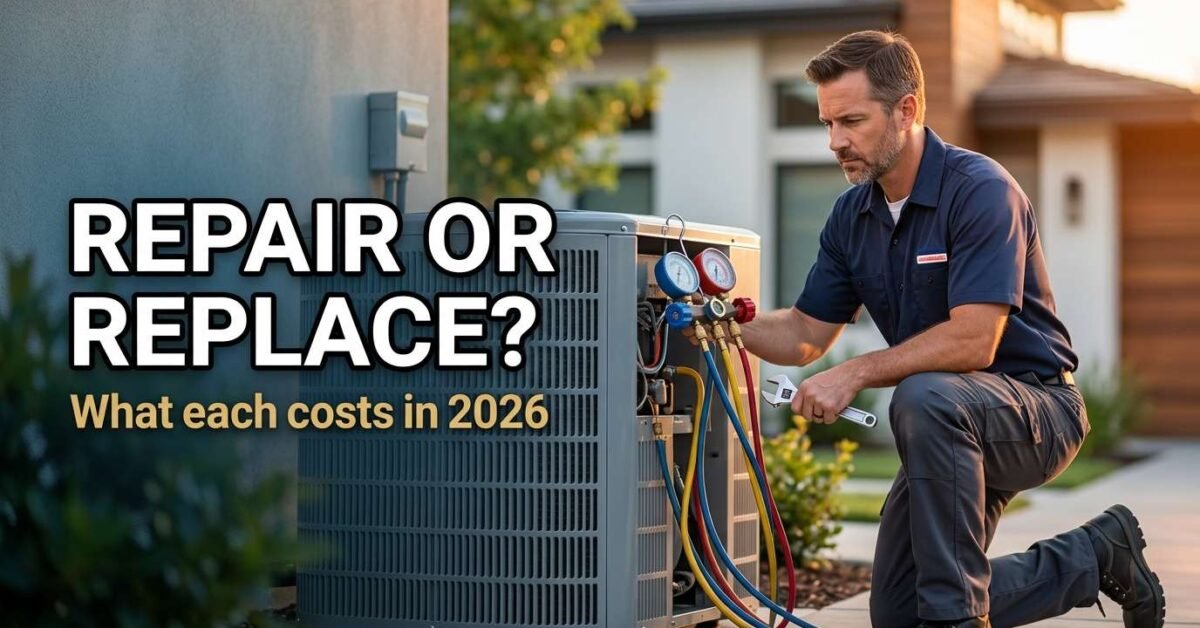
When the AC quits on a hot afternoon, the first question is whether to fix it or replace it. The right answer depends on the unit’s age, the cost of the repair, and how efficient the old system is. This guide gives you a simple framework and realistic 2026 costs so you can decide with confidence.
First, why is it not cooling?
Common causes range from cheap to serious: a clogged filter or tripped breaker, a failed capacitor, a refrigerant leak, a bad blower motor, or a failing compressor. A capacitor might be a modest repair, while a compressor or a major refrigerant leak on an older unit can approach the cost of replacement. Have a technician diagnose the specific fault before deciding.
The 50 percent rule and the age test
A widely used guideline: if a repair costs more than 50 percent of the price of a new system, replacement usually makes more sense. Pair that with age. Air conditioners typically last 12 to 17 years. If your unit is past 12 and needs an expensive repair, replacing it is often the better long-term value, especially because a new high-SEER2 system will cut your energy bills. A newer unit with a cheap fault is almost always worth repairing.
The efficiency factor
Older systems in the 10 to 13 SEER range use noticeably more electricity than modern equipment. If your unit is aging and your bills are climbing, the running-cost savings of a new system offset part of its price over time. Estimate that gap with our cooling cost calculator and our SEER2 savings calculator.
What each path costs in 2026
Repairs vary widely by fault, from modest parts-and-labor jobs to major component replacements. A full system replacement depends on your tonnage, efficiency, state labor rates, and whether ductwork is involved. Get a tailored range for your state with the AC replacement cost calculator, and if replacement is the call, the HVAC financing calculator shows what monthly payments might look like. For deeper background on maintenance and efficiency, see the Department of Energy’s maintenance guidance.
A quick decision checklist
Lean toward repair if the unit is under about 10 years old, the fault is minor, and the system is reasonably efficient. Lean toward replacement if it is past 12 years, the repair exceeds half the cost of a new system, refrigerant is involved on an old unit, or your energy bills have been creeping up for years.
Typical repairs, from minor to major
Not all repairs carry the same weight in the decision. A clogged filter, a tripped breaker, or a dirty coil is routine maintenance, not a reason to replace. A failed capacitor or contactor is a common, relatively modest fix that is usually worth doing on almost any unit. A blower motor sits in the middle. The repairs that tip the scale toward replacement are the big ones: a failing compressor or a significant refrigerant leak, especially on a system using older refrigerant, where the parts and labor can climb toward the cost of a new system. When a technician quotes one of these on an aging unit, that is the moment to run the 50 percent rule.
Do not forget the warranty
Before authorizing a major repair, check whether the part or the system is still under manufacturer warranty. Many compressors and heat exchangers carry long parts warranties, which can dramatically change the repair-versus-replace math by covering the most expensive component. You typically still pay for labor and refrigerant, but a covered part can make repairing a mid-life system the clear winner. Keep your original paperwork, or ask the installer to look up coverage by serial number, before you decide.
Frequently asked questions
Should I repair or replace my AC?
Replace if the unit is past about 12 years or the repair costs more than half the price of a new system. Repair a newer unit with a minor, inexpensive fault.
How long does an AC unit last?
Most central air conditioners last 12 to 17 years with maintenance. Past that, an expensive repair usually favors replacement.
What is the 50 percent rule for AC replacement?
If a repair costs more than 50 percent of the price of a new system, replacement is usually the better value, especially on an older, less efficient unit.
Get real quotes from local HVAC pros
Compare installed prices from licensed contractors near you. Free, no obligation — takes about a minute.