How Much Does It Cost to Install a Heat Pump in 2026?
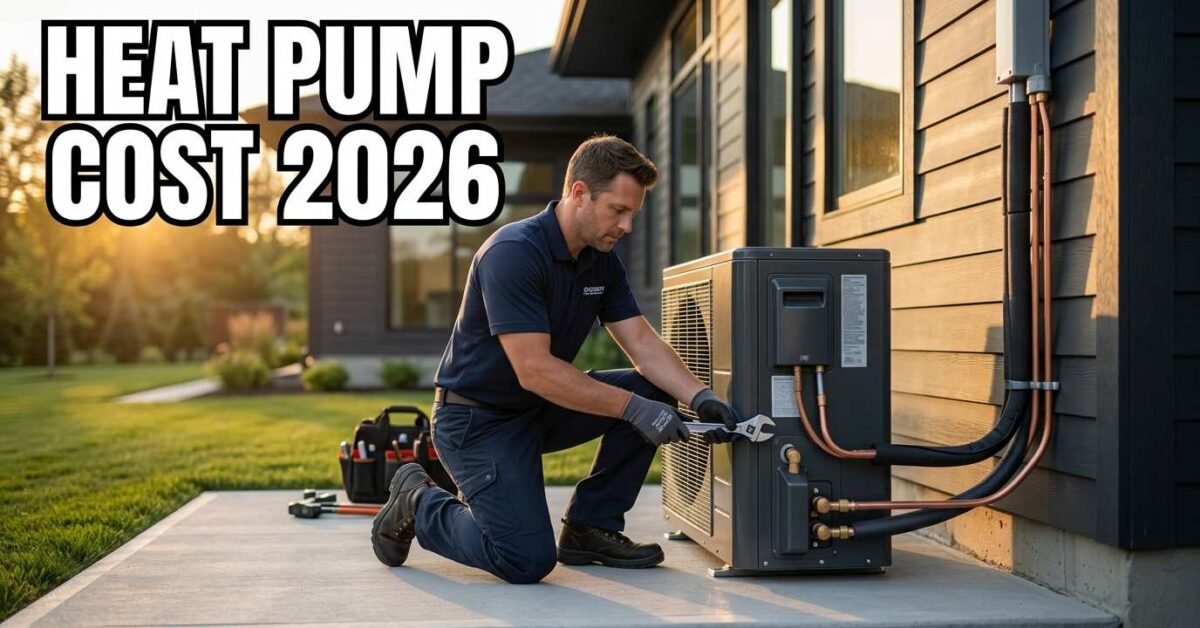
Heat pump installations are surging across the U.S. — and so are the questions about what they actually cost. Whether you are replacing an aging AC-and-furnace combo or adding heating-and-cooling to a home that never had it, this guide covers what you will pay in 2026, what drives the price up or down, and how to decide whether a heat pump is the right financial move for your home.
What is a heat pump and why does it cost what it does?
A heat pump moves heat rather than generating it, which makes it fundamentally different from a furnace. In summer it works exactly like an air conditioner, pulling heat out of your home. In winter it reverses and pulls heat from outdoor air into your home. That dual function is why the cost comparison is not heat pump vs air conditioner — it is heat pump vs AC plus furnace, since one heat pump replaces both.
The installed price reflects four components: the outdoor unit and indoor air handler (or indoor heads for a ductless system), refrigerant lines and electrical work, labor, and permits. Each of these varies by region, which is why a heat pump in New York costs significantly more than the same unit in North Carolina.
Installed cost by heat pump type
There are three main categories, and they sit at different price points.
Ducted air-source heat pump
This is the most common residential type. It uses your existing ductwork, replaces both AC and heating, and is what most contractors quote when you say “heat pump.” Installed costs vary by size and state — the heat pump cost calculator gives you a state-specific range for any tonnage. A 3-ton system for a mid-size home in a moderate-cost state is a reasonable mental anchor for the middle of the range.
Ductless mini-split heat pump
Mini-splits skip ductwork entirely, using wall-mounted indoor heads connected to an outdoor condenser by refrigerant lines. A single-zone system (one indoor head) costs less than a ducted system, making it a popular choice for additions, sunrooms, or homes without existing ducts. But multi-zone coverage — three to five indoor heads for a whole home — often approaches or exceeds the cost of a ducted system. Size each room with the mini-split sizing calculator.
Ground-source (geothermal) heat pump
Geothermal systems use the earth’s stable underground temperature as a heat source and sink, delivering the highest efficiency of any heating-and-cooling system. The catch is cost: the ground loop (horizontal trenches or vertical boreholes) adds significant expense on top of the equipment itself. Geothermal is still eligible for the federal Section 25D tax credit at 30 percent of project cost through 2032, which meaningfully narrows the gap. For most homeowners on a standard lot with existing ductwork, air-source is the practical choice; geothermal is worth evaluating for new construction, large properties, or extreme climates where the efficiency advantage is biggest.
What affects your installed price
Beyond the type and size of the system, several factors push the number up or down.
Your state and metro. Labor rates, permit costs, and local code requirements vary widely. California’s Title 24 compliance adds cost; Texas’s competitive market keeps pricing aggressive. The calculator prices every estimate for your specific state.
Ductwork. If your home has existing ductwork in good condition, a ducted heat pump is a straightforward swap. If ducts are absent, damaged, or undersized, adding or replacing them can add several thousand dollars — or push you toward a ductless mini-split instead.
Cold-climate models. Standard air-source heat pumps lose efficiency below about 25 to 30°F. Cold-climate (hyper-heat) models use enhanced compressor technology to maintain heating output down to -15°F or lower, but they cost more than standard units. If you are in climate zone 5 or higher, a cold-climate model is advisable.
Efficiency tier. A base-efficiency heat pump meeting the code minimum costs less than a high-SEER2 / high-HSPF2 premium unit. Whether the premium pays back depends on your climate and electricity rate — estimate the difference with the SEER2 savings calculator.
The 2026 federal tax credit situation
The Section 25C credit that offered up to $2,000 on qualifying air-source heat pumps expired on December 31, 2025. Systems installed in 2026 do not qualify. The Section 25D geothermal credit (30 percent, no cap) remains available through 2032. With the air-source federal credit gone, state and utility rebates are now the primary incentive — check what is available in your area with the rebate finder.
Heat pump vs AC plus furnace: the real comparison
Because a heat pump handles both heating and cooling, the honest cost comparison is against a combined AC-and-furnace replacement, not an AC alone. On installed cost, a heat pump often comes in near the same price as an AC plus a mid-efficiency gas furnace — sometimes slightly more, sometimes less, depending on state and equipment tier. On running cost, the heat pump usually wins in mild to moderate climates because it moves heat rather than burning fuel, but in very cold areas with cheap natural gas, a furnace can still be cheaper to operate. Run the numbers for your specific state and energy prices with the heat pump vs furnace calculator.
How to get the best price
Three practical steps lower your cost without cutting corners. First, get at least three bids — heat pump pricing varies more between contractors than between brands, so the spread between quotes is often wider than people expect. Second, ask each contractor for a Manual J load calculation rather than accepting a size based on square footage alone; right-sizing avoids paying for capacity you do not need. Third, time the project for spring or fall if possible — off-peak scheduling often yields better pricing and faster availability than an emergency replacement in July or January.
Frequently asked questions
How much does it cost to install a heat pump in 2026?
Installed air-source heat pump costs vary by size, state, and ductwork. Use the heat pump cost calculator for a state-specific range. Ductless mini-splits cost less for a single zone but scale up for multi-zone whole-home coverage.
Is a heat pump worth it over a furnace?
In mild to moderate climates with reasonable electricity rates, a heat pump typically costs less to own and operate than an AC-plus-furnace combination. In very cold areas with cheap gas, a furnace can win on running cost. The heat pump vs furnace calculator compares both for your state.
Is there still a heat pump tax credit in 2026?
The federal Section 25C air-source credit expired December 31, 2025. The Section 25D geothermal credit remains at 30 percent through 2032. State and utility rebates still apply in many areas.
How long does a heat pump installation take?
A straightforward ducted heat pump replacement typically takes one day. Adding ductwork, converting from a different system, or installing a multi-zone mini-split can extend the job to two or three days.
What size heat pump do I need?
It depends on your square footage, climate zone, insulation, and windows. The HVAC sizing wizard estimates your tonnage and BTU using a climate-adjusted load model.
Get real quotes from local HVAC pros
Compare installed prices from licensed contractors near you. Free, no obligation — takes about a minute.